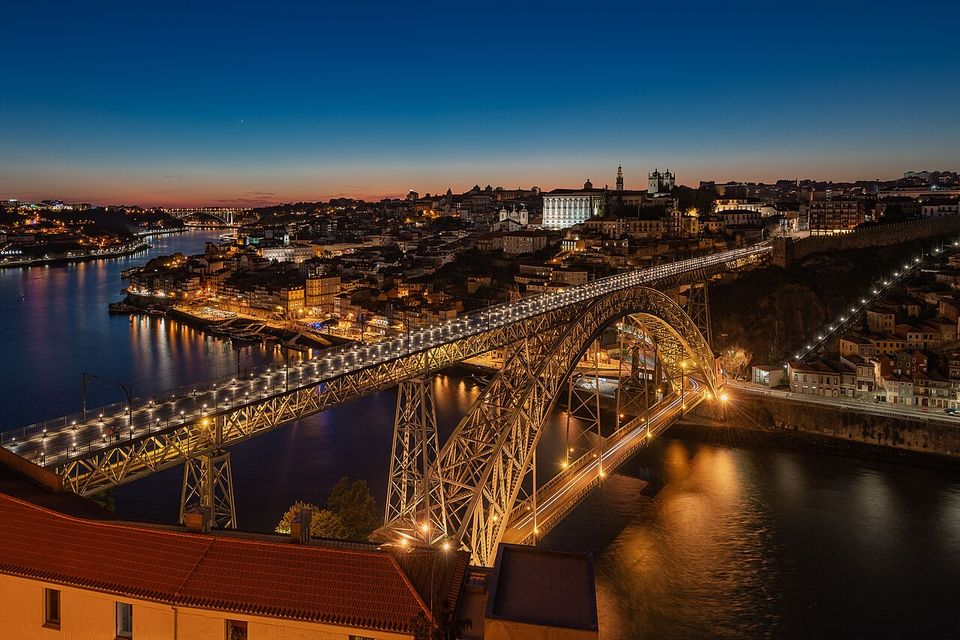
Two of Porto's best-known landmarks face the old town across the Douro. The Dom Luís I Bridge links Porto and Vila Nova de Gaia, and the Serra do Pilar monastery stands on the hill at the Gaia end. Both belong to the UNESCO World Heritage Site listed in 1996 with the historic centre of Porto. One thing first: at the time of writing, the monastery is closed to visitors. This article tells you what you can see from outside.
Dom Luís I Bridge
It is a double-deck iron arch bridge, built between 1881 and 1886 by the Belgian company Société de Willebroeck. The upper deck opened in 1886. The designer was Théophile Seyrig, a pupil of Gustave Eiffel who had worked on the Maria Pia bridge. The main arch spans about 172 metres, among the longest of its type when the bridge was built.
The upper deck carries pedestrians and Porto Metro line D. The lower deck has been open to public transport, bicycles, taxis and pedestrians since April 2023, but the rules have changed before, so check what is allowed.
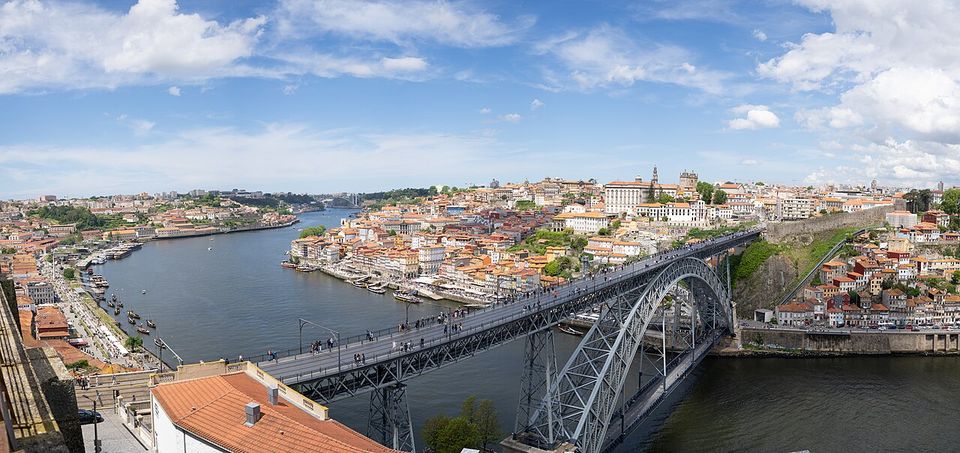
Tip: cross the upper deck on foot and give yourself time to stop. From the Gaia side you can look back at the Ribeira and the old town.
Mosteiro da Serra do Pilar
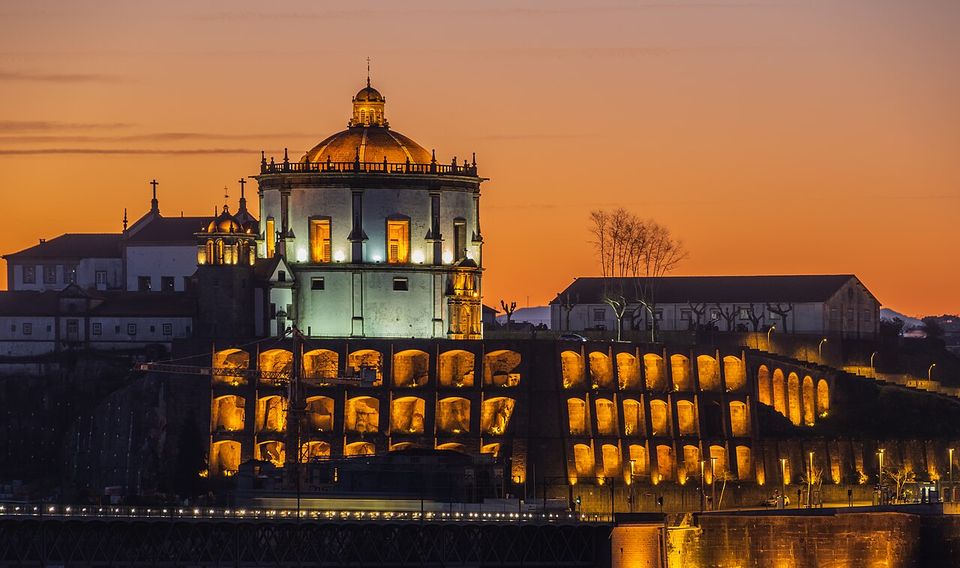
What you cannot do: go inside. The heritage authority (DGPC) lists the monument as temporarily closed for requalification works, with no reopening date. That includes the circular cloister, which is an interior. We have not confirmed whether the terrace in front is open during the works.
What you can do: look at it from outside, and it is worth the walk for its position, its history and its shape. A new monastery was founded here in 1537, by order of King João III, for monks from São Salvador de Grijó. The church and the cloister are circular, and from outside you can see the round church and its dome on top of the hill. The buildings date from the 16th and 17th centuries. During the Siege of Porto in 1832 the monastery served as an improvised fortress, and it later served the army. The address is Largo de Aviz, in Vila Nova de Gaia.
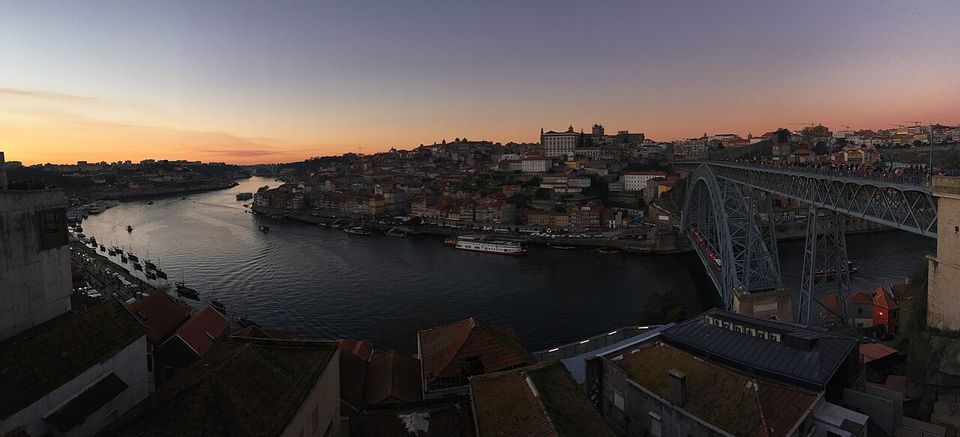
Tip: the best places to look at it are the Jardim do Morro, at the foot of the hill, and the upper deck of the bridge. Check the heritage authority's page before you go, in case it has reopened.
Nearby
Nearby, we can see ...
- The Jardim do Morro, at the Gaia end of the upper deck, two to four minutes on foot, uphill. It was built in 1927, with a lake, a bandstand and 22 lime trees. On a clear evening, many people sit here to watch the light change over the Ribeira, according to guides.
- The Gaia Cable Car, whose upper station is beside the garden, the bridge and the monastery. The line is about 560 metres long, the ride takes under four minutes, and the lower station is on the Cais de Gaia. Check times and ticket details before you go.
- The Fernandine Wall, on the Porto side, near the Guindais slope. The old city wall was started in the mid 14th century and finished around 1370, under King Fernando. The Guindais funicular that runs beside it has been suspended since July 2026, so do not plan to ride it.
Where to eat
- Adega São Nicolau, on Rua de São Nicolau in the Ribeira, serves traditional Portuguese food and is known for its octopus dishes.
- Casa Adão, on Avenida Ramos Pinto in Gaia, is a rustic place for traditional Portuguese food. Booking is recommended. Check before you go.
- DeCastro Gaia, at Largo Miguel Bombarda in Espaço Porto Cruz, serves modern Portuguese small plates from chef Miguel Castro e Silva. Check before you go.
Opening days and hours differ between sources, so check before you go.